
10 Michigan Native Wildflowers to Watch for this Spring

Wildflower alert! As Michigan continues to warm in the spring, a beautiful array of native wildflowers are the first to greet the season. Join us to learn about these flowers and find out how to see them for yourself in the Detroit region's outdoors!

Spring is such a wonderful time in Michigan. The forests, wetlands, and prairies are beginning to show signs of life, and everything is becoming green again. Pollinators are awake and searching for nectar, finding it in the colorful spring ephemerals that have begun to pop up on the forest floor.
What are Spring Ephemerals?
Spring ephemerals are plants that bloom early in the spring. These perennial native wildflowers complete their entire cycle of blooming and producing seed in the short period of time that sunlight reaches the forest floor. After the towering forest trees grow their leaves and cast their shade, most spring flowers will disappear, with many continuing to grow by roots underground. Spring ephemerals are an important piece of the native ecosystem, providing an essential food source for pollinators such as bees, ants, and butterflies.
Since spring ephemerals have such a short amount of time to bloom and set seed every year, they often take many years to mature and flower from a seed. This makes them susceptible to invasive plant species such as garlic mustard and autumn olive. Wildlife also love to munch on these native wildflowers.
Interested in experiencing the magic of these native wildflowers for yourself? Join one of our spring hikes! Throughout the month of May and into June, we will be hiking various trails in search of Michigan native wildflowers. Hikers will have the opportunity to see and learn about each plant we see, while experiencing first-hand the ecosystems where they can be found.
Check out the end of this article for a list of our upcoming featured spring native wildflower hikes!
Here are 10 Michigan Wildflowers to look for this Spring:
1. Virginia Spring Beauty (Claytonia virginica)

Identification: Five white or pink petals, each petal with pink veining. Has thin leaves and grows to 3-6” tall.
Habitat: Shaded beech-maple and oak forests. Can also grow in moist lowlands.
Fun Fact: Spring Beauty is a dainty little flower, and an important early nectar source for pollinators. Pink lines on the petals help direct insects to the flower’s center.
2. Yellow Trout Lily (Erythronium americanum)

Identification: Trout lily flowers each have six yellow petals that bend backwards. Leave are a mottled green and brown; mature flowering plants have two leaves, while immature plants will only have one leaf.
Habitat: Rich forests and moist thickets.
Fun Fact: This beautiful flower may take 4-7 years to grow from seed before it blooms for the first time, so you may come across entire patches of leaves with no flowers. If you are lucky enough to come across a trout lily in bloom, be sure to snap a photo!
3. Round-Lobed Hepatica (Hepatica americana)

Identification: Leathery leaves, each with three rounded lobes. Light lavender flowers are found at the top of a hairy stalk.
Habitat: Partially shaded woodlands with rich soil, sometimes found on rocky slopes.
Fun Fact: This flower does not have true petals, but rather sepals that act like petals. Sepals are usually found underneath the flower, providing support and structure. Round-lobed hepatica leaves are considered evergreen, meaning they can stay green throughout the entire winter until the following spring.
4. Jack-in-the-Pulpit (Arisaema triphyllum)

Identification: Three large, pointed leaves, often two sets. The flower is green and maroon striped, located at the top of a spike.
Habitat: All kinds of deciduous forests, sometimes even growing in open areas after forest clearing.
Fun Fact: Unique and easily recognized, jack-in-the-pulpit is named for the shape of its flower, which resembles a minister at the pulpit. In the fall, a bright red cluster of berries provides a food source for birds (but are toxic to humans!)
5. Marsh Marigold (Caltha palustris)

Identification: Glossy green leaves that are rounded or heart shaped. Flowers are a bright yellow, measuring about 1/2 - 1 1/2 inches across, typically found with 5-9 petals.
Habitat: Wet areas such as marshes, swamps, and along streams.
Fun Fact: Marsh marigold flowers appear yellow to humans, but they appear as an ultraviolet color to insects.
6. Large White Trillium (Trillium grandiflorum)

Identification: Each plant has three leaves that grow from a single point on the stem. Three broad white petals form the flower, showing yellow at the center.
Habitat: Well drained, moist to dry deciduous forests.
Fun Fact: Often forming large colonies, the trillium is one of the most well-known spring wildflowers here in Michigan. As a favored food by deer, repeated deer grazing in some areas could be affecting flowering populations of trillium.
7. Wild Geranium (Geranium maculatum)

Identification: Deeply lobed and toothed leaves 3-4 inches across. Pale purple flowers of five petals each are found at the end of long stems.
Habitat: Rich forests, especially in moist sites such as near streams or swamps, but can also be found in drier forests.
Fun Fact: Wild geranium can often be found in clumps, spreading by roots underground like many other spring ephemerals. After flowering, this plant produces a seed capsule that resembles a crane's bill. When seeds are released, they are launched away from the parent plant.
8. Mayapple (Podophyllum peltatum)

Identification: Each plant has one or two umbrella-like, lobed leaves that sprout from the top of a stalk. White flowers grow from where the stem splits. This plant has a less-obvious flower, often hidden beneath its wide leaves.
Habitat: Deciduous forests and borders of forests, both moist and dry sites.
Fun Fact: After flowering, mayapple will produce a fruit resembling a small apple, which ripens to a pale yellow for a short period of time. Deer and other small mammals love to eat mayapple fruit.
9. Rue Anemone (Thalictrum thalictroides)

Identification: Each leaf has three lobes on the end. Flowers are white, sometimes pink, with 5-10 petals.
Habitat: Rich or dry forests, well-drained soil.
Fun Fact: Rue anemone does not produce nectar, only offering pollen to passing insects. Similar to round-lobed hepatica, rue anemone flowers are made up of petal-like sepals, rather than true petals.
10. Wild Lupine (Lupinus perennis)
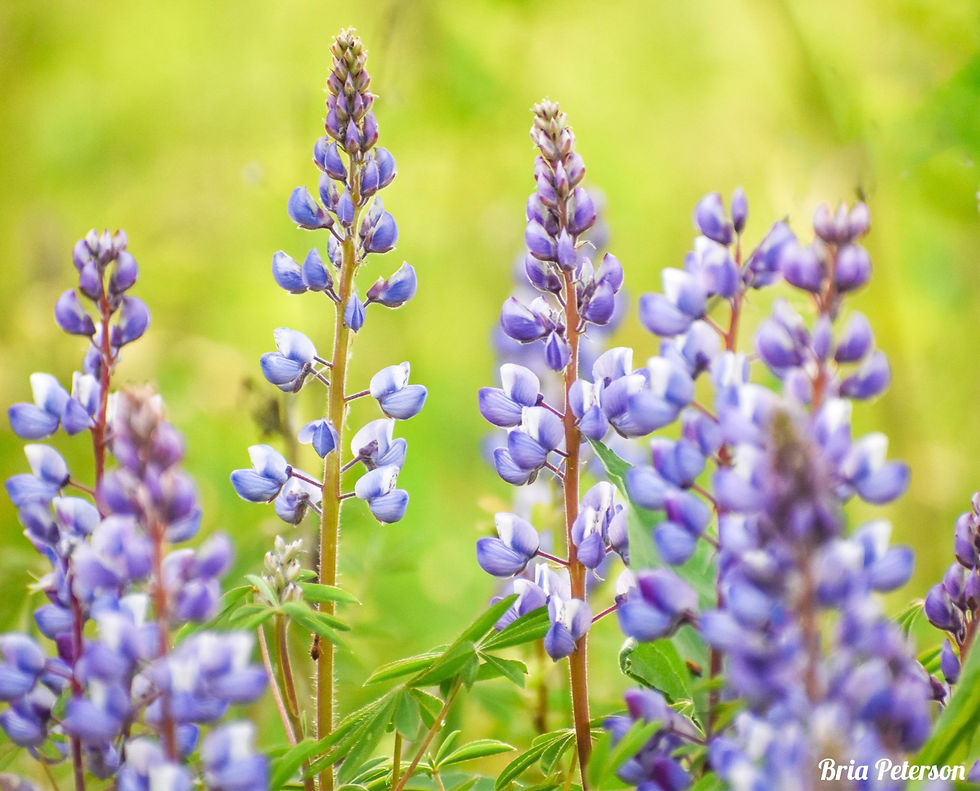
Identification: A perennial plant in the pea family, wild lupine has beautiful stalks of pink to purple flowers. Each leaf consists of 7-11 narrow leaflets radiating from a single point.
Habitat: Dry sandy ground, found in open areas such as prairies and savannas.
Fun Fact: The federally endangered Karner blue butterfly relies entirely on lupine for its survival, similar to the way monarch butterflies rely on milkweed. Lupine seed pods resemble bean or pea pods, and when dry, explode open to release and scatter its seeds.
Featured Spring Wildflower Hikes
As promised, here's a list of our upcoming spring hikes! We are excited to bring visitors out to witness the magical spring beauty of our very own Michigan trails. These hikes will allow hikers to experience everything our trails have to offer, with a special focus on finding and learning about spring wildflowers. Click each link to learn more and register!
Monday, May 18th
Park: Brighton State Recreation Area
Trail: Richardson Trail (3 miles)
Start time: 5:00 pm
Wednesday, May 20th
Park: Island Lake State Recreation Area
Trail: Yellow Trail Loop (6.2 miles)
Start time: 4:30 pm
Friday, May 22nd
Park: Pinckney State Recreation Area
Trail: Crooked Lake Trail (4.4 miles)
Start time: 9:00 am
Tuesday, May 26th
Park: Brighton State Recreation Area
Trail: Penosha Trail (5 miles)
Start time: 5:00 pm
Friday, May 29th
Park: Pinckney State Recreation Area
Trail: Crooked Lake Trail (4.4 miles)
Start time: 9:30 am
Park: Pinckney State Recreation Area
Trail: Silver Lake Trail (2.6 miles)
Start time: 1:00 pm
Saturday, May 30th
Park: Waterloo State Recreation Area
Trail: Hickory Hill Trail (4.4 miles)
Start time: 10:00 am
Hello! My name is Bria, and I would love to be your trail guide! Whether you're new to hiking or have been at it for years, there's an opportunity for everyone. While on the trail, I enjoy sharing all sorts of fun facts while creating a fun and safe experience for hikers of all ages.
All photos in this post were taken by the author, Bria Peterson.


A pocket watch adds charm to both casual and formal outfits. Its simple design and easy-to-read dial make it a favorite for people who enjoy traditional accessories. Many collectors and gift buyers appreciate its lasting appeal and dependable look. An Open Face Pocket Watch offers quick time checking because the dial is always visible without opening a cover. It pairs well with suits, waistcoats, or everyday clothing, bringing a touch of vintage style while remaining practical for daily use and special occasions alike.
Awesome article, Bria!! Stoked about these upcoming wildflower hikes! 🙌🌻🌷